Could a higher minimum wage be an answer to Ohio’s affordability challenges?
Could a Higher Minimum Wage Be an Answer to Ohio's Affordability Challenges?
For years, Ohio marketed itself as the affordable alternative—a place where the American Dream was still within reach without the crippling cost of coastal cities. But for millions of Buckeyes, that dream is rapidly fading.
I recently spoke with Sarah, a single mother working two part-time jobs in Dayton, who sums up the current crisis perfectly. "I'm earning more than the minimum wage, yes, but my rent jumped 18% in the last two years. I'm making more money, but I'm poorer," she told me. Sarah's story is not unique; it's a reflection of the profound affordability squeeze gripping the Buckeye State.
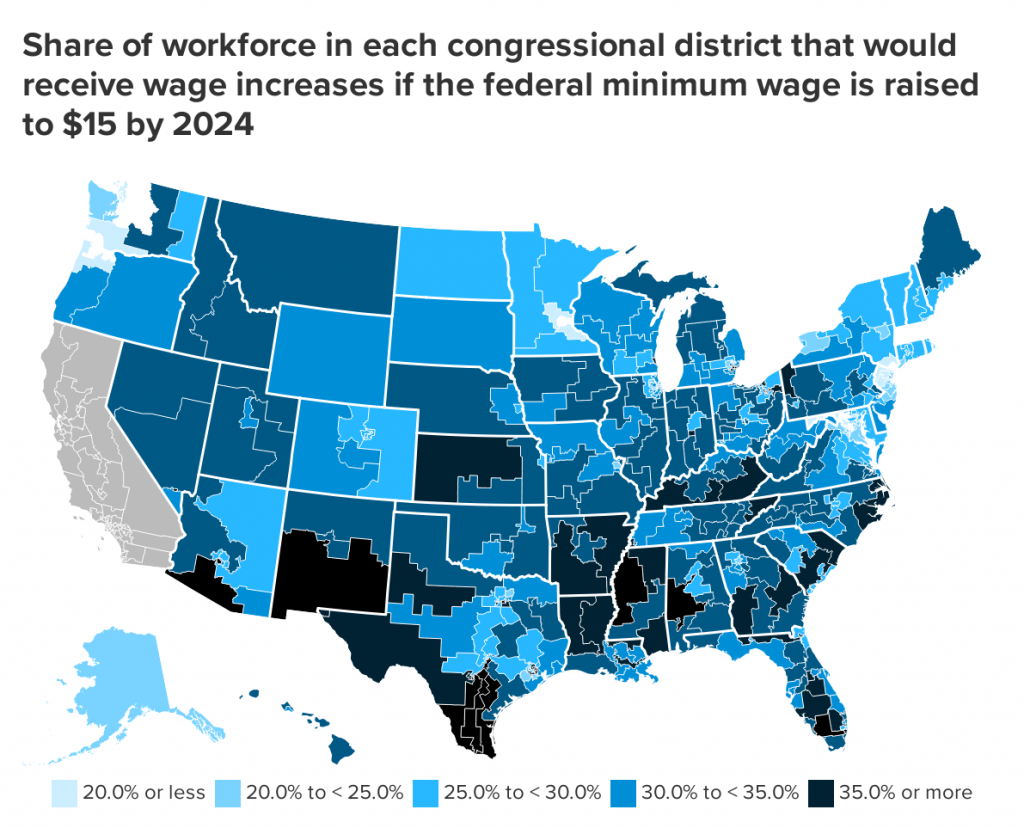
As the cost of living continues its aggressive climb across major metropolitan areas like Columbus, Cincinnati, and Cleveland, policymakers are urgently searching for solutions. One of the most fiercely debated proposals is raising the state's minimum wage significantly—potentially moving towards the $15 or even $20 benchmark.
But is this the economic lever Ohio needs to pull, or would a mandatory higher minimum wage simply accelerate inflation and hurt the very small businesses that form the backbone of local economies? This analysis dives deep into the potential impacts, the economic arguments, and the true cost of living in the Buckeye State today.
The Affordability Squeeze in the Buckeye State
Ohio has long enjoyed a reputation for low costs, but the metrics have begun to change, especially concerning essentials like housing and childcare. While the state's median household income has risen modestly, it has failed to keep pace with soaring expenses.
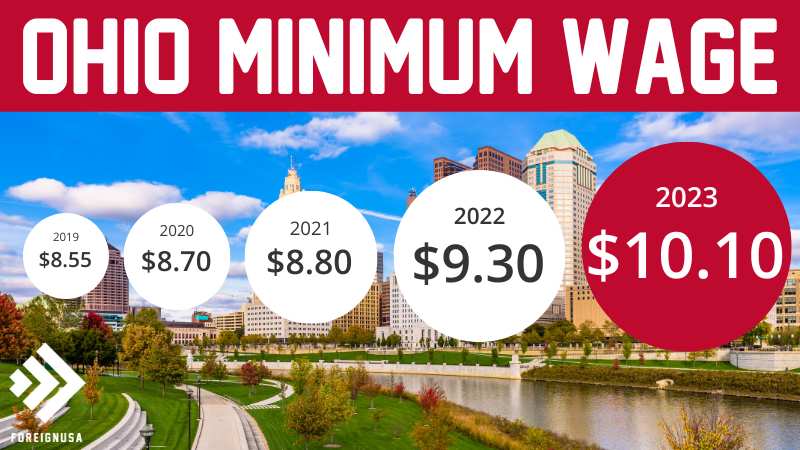
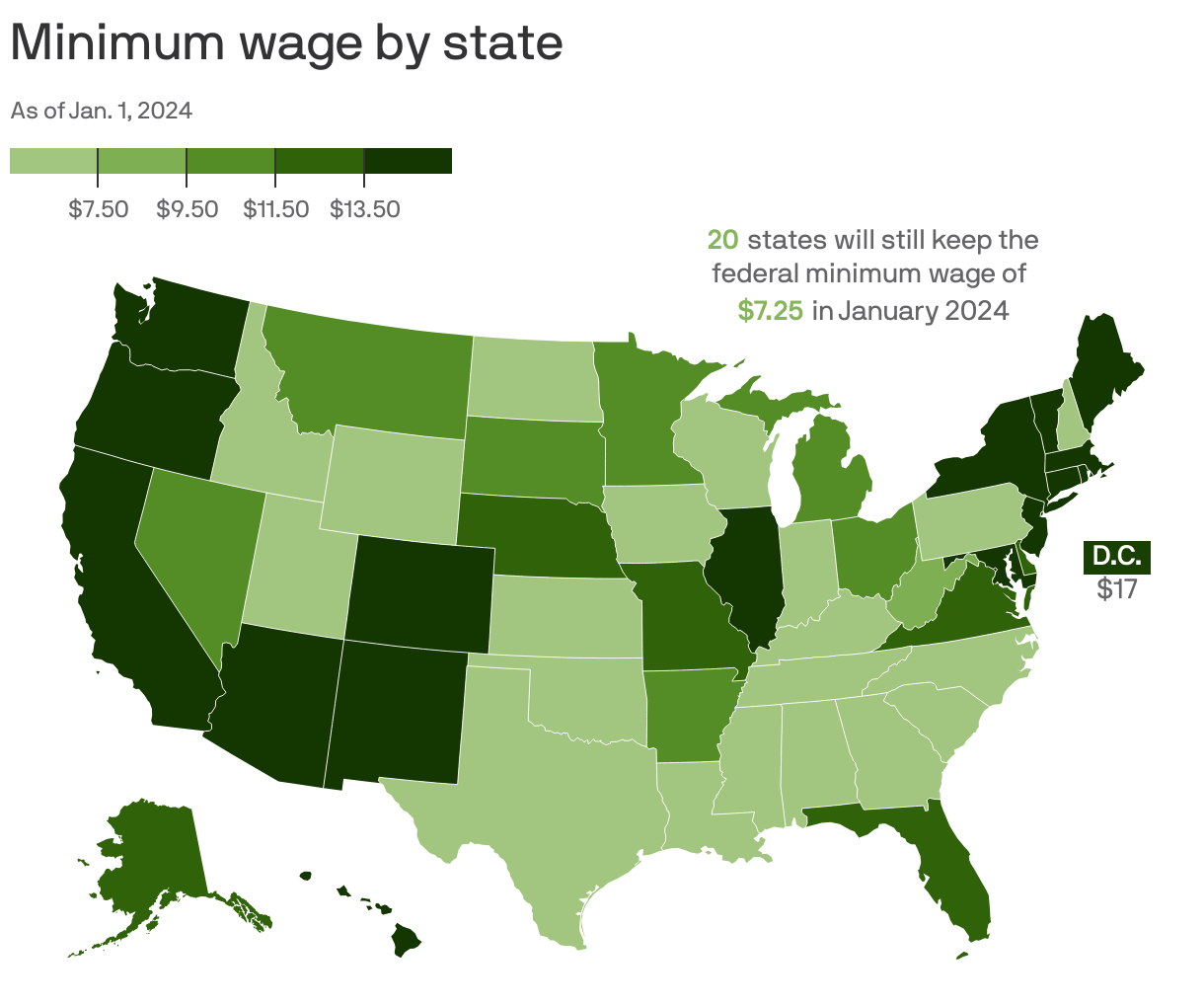
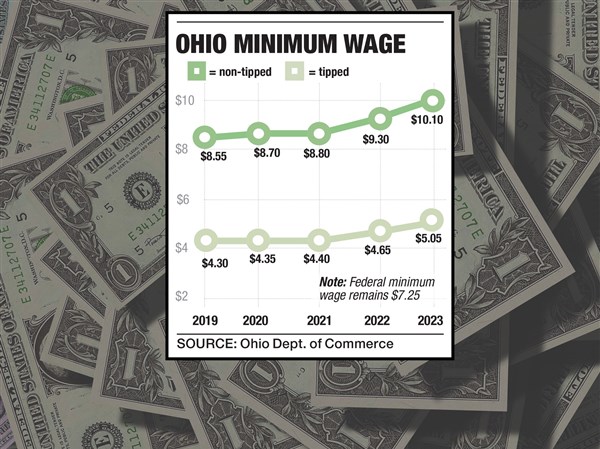
The reality is that Ohio's current minimum wage is $10.45 per hour (as of 2024), adjusted annually for inflation. However, economic models show that the actual living wage—the amount needed to cover basic expenses without needing public assistance—is dramatically higher, particularly for households with children.
For many low-income workers, the gap between their paycheck and basic necessity costs is becoming a chasm. This disparity leads to immense financial instability.
Key Factors Driving Ohio's Affordability Crisis:
- Housing Shortages: Post-pandemic migration and increased institutional investment have driven up median rents and home prices, especially in central Ohio markets.
- Stagnant Wage Growth: While wages are rising nationally, many service sector and retail jobs in Ohio still pay near the minimum, failing to reflect productivity gains or rising costs.
- Childcare Expenses: Childcare costs in Ohio frequently exceed the annual tuition of state universities, acting as a massive barrier to workforce participation.
- Healthcare Costs: Despite relative regional stability, healthcare premiums and deductibles continue to consume a disproportionate share of lower-wage earners' budgets.
Ohio is no longer just competing with neighboring states; it is grappling with national economic forces that disproportionately affect those earning the lowest wages. The debate is now shifting: Can we afford *not* to raise the minimum wage?
The $15 Debate: Will Wage Increases Lift the Economy or Kill Jobs?
The central argument for a substantial hike in the minimum wage—say, to $15 or $20 per hour—is that it injects immediate capital into the hands of those most likely to spend it. This increased consumer spending is theorized to stimulate local economies, creating a virtuous cycle of demand and growth.
Supporters argue that increasing the baseline income is the most direct and effective tool to combat income inequality and reduce reliance on expensive public assistance programs like SNAP and Medicaid.
Economic Benefits of a Higher Minimum Wage:
A higher wage floor could have several beneficial ripple effects:
- Reduced Employee Turnover: Higher pay leads to better employee retention, reducing training costs for employers.
- Increased Productivity: Employees who feel fairly compensated are often more engaged and productive.
- Poverty Reduction: Lifting millions of Ohioans above the federal poverty line, allowing them to participate more fully in the consumer economy.
- Local Economic Stimulus: Low-wage workers spend their money quickly and locally on essential goods and services.
However, the opposition views this proposal not as a stimulus, but as a mandate that fundamentally alters the cost of doing business, particularly for small businesses and regional franchises. Critics warn of the inevitable unintended consequences.
The primary concern is that employers, facing significantly higher labor costs, will respond in three ways: raising prices (leading to inflation), reducing staff hours or overall headcount, or accelerating automation investments.
Consider a small, independent Ohio diner. If labor costs rise by 30%, that diner owner must either drastically increase the price of a hamburger or reduce staffing, potentially cutting servers' shifts. This is the core dilemma economists grapple with: balancing the social good with fiscal stability.
"If the minimum wage jumps too high, too fast, my only option is to replace two entry-level kitchen staff with a new automated fryer system," noted a restaurant owner in Akron who requested anonymity. "We want to pay people well, but we have razor-thin margins. A sudden, steep increase makes us uncompetitive."
Studies on past minimum wage increases, such as those in Seattle and various states, have yielded mixed results. While some research shows minimal negative job effects, other studies point to significant reductions in entry-level hiring, especially for young workers and teenagers. The timing and scale of the increase are critical variables.
The Policy Paradox: Minimum Wage as a Single Solution
While a higher minimum wage offers immediate relief to low-income workers, it is crucial to recognize that it is not a complete solution to Ohio's complex affordability crisis. The effectiveness of any wage hike can be quickly negated if complementary policy measures are not in place.
The most critical challenge facing low-wage workers is housing insecurity. If a worker receives a 20% raise, but their landlord immediately increases rent by 15%, the net positive impact is marginal. Without controls or substantial investment in subsidized and affordable housing development, wage increases risk fueling housing price inflation.
The concept of a "living wage calculation" shows that geographical disparities across Ohio are massive. The wage needed to afford a modest two-bedroom apartment in Downtown Columbus is vastly different from the wage needed in rural Appalachia. A one-size-fits-all statewide minimum wage may not address regional cost differences effectively.
Addressing Affordability Beyond the Paycheck:
The long-term path to stability requires a holistic policy overhaul focusing on systemic barriers.
- Housing Development: Strategic state investment in high-density, low-income housing projects near transit hubs.
- Childcare Subsidies: Significant expansion of state subsidy programs to cap the amount a family must pay for childcare as a percentage of their income.
- Regional Wage Adjustments: Implementing mechanisms that allow high-cost metropolitan areas (like the "Three C's"—Columbus, Cincinnati, Cleveland) to set higher localized minimums.
- Workforce Training: Investing in skills training and apprenticeship programs to help low-wage workers transition into higher-paying, mid-skill careers.
Economists largely agree that sustained, meaningful progress on Ohio's affordability crisis requires action on multiple fronts simultaneously. While increasing the minimum wage tackles the income side of the equation, ignoring the expenditure side (housing, health, and childcare) means only treating a symptom, not the cause.
The debate over the higher minimum wage proposal in Ohio is far from over. It is a critical litmus test for the state's commitment to its low-income workforce and its future economic model. Whether Ohio embraces a significant increase will determine if the Buckeye State can truly maintain its promise of widespread economic opportunity for all its residents, or if its affordability advantage will become a relic of the past.
Could a higher minimum wage be an answer to Ohio's affordability challenges?
Could a higher minimum wage be an answer to Ohio's affordability challenges? Wallpapers
Collection of could a higher minimum wage be an answer to ohio's affordability challenges? wallpapers for your desktop and mobile devices.
Gorgeous Could A Higher Minimum Wage Be An Answer To Ohio's Affordability Challenges? Scene Collection
A captivating could a higher minimum wage be an answer to ohio's affordability challenges? scene that brings tranquility and beauty to any device.
Spectacular Could A Higher Minimum Wage Be An Answer To Ohio's Affordability Challenges? Landscape for Mobile
Find inspiration with this unique could a higher minimum wage be an answer to ohio's affordability challenges? illustration, crafted to provide a fresh look for your background.

Captivating Could A Higher Minimum Wage Be An Answer To Ohio's Affordability Challenges? Abstract Illustration
A captivating could a higher minimum wage be an answer to ohio's affordability challenges? scene that brings tranquility and beauty to any device.

Artistic Could A Higher Minimum Wage Be An Answer To Ohio's Affordability Challenges? Landscape in 4K
This gorgeous could a higher minimum wage be an answer to ohio's affordability challenges? photo offers a breathtaking view, making it a perfect choice for your next wallpaper.
Mesmerizing Could A Higher Minimum Wage Be An Answer To Ohio's Affordability Challenges? Landscape Concept
Experience the crisp clarity of this stunning could a higher minimum wage be an answer to ohio's affordability challenges? image, available in high resolution for all your screens.
Captivating Could A Higher Minimum Wage Be An Answer To Ohio's Affordability Challenges? Artwork Art
This gorgeous could a higher minimum wage be an answer to ohio's affordability challenges? photo offers a breathtaking view, making it a perfect choice for your next wallpaper.

Breathtaking Could A Higher Minimum Wage Be An Answer To Ohio's Affordability Challenges? Artwork Photography
Experience the crisp clarity of this stunning could a higher minimum wage be an answer to ohio's affordability challenges? image, available in high resolution for all your screens.

Mesmerizing Could A Higher Minimum Wage Be An Answer To Ohio's Affordability Challenges? Picture Digital Art
Transform your screen with this vivid could a higher minimum wage be an answer to ohio's affordability challenges? artwork, a true masterpiece of digital design.

Breathtaking Could A Higher Minimum Wage Be An Answer To Ohio's Affordability Challenges? Scene in 4K
Transform your screen with this vivid could a higher minimum wage be an answer to ohio's affordability challenges? artwork, a true masterpiece of digital design.

Mesmerizing Could A Higher Minimum Wage Be An Answer To Ohio's Affordability Challenges? Background Art
Experience the crisp clarity of this stunning could a higher minimum wage be an answer to ohio's affordability challenges? image, available in high resolution for all your screens.
Vivid Could A Higher Minimum Wage Be An Answer To Ohio's Affordability Challenges? Background Concept
Discover an amazing could a higher minimum wage be an answer to ohio's affordability challenges? background image, ideal for personalizing your devices with vibrant colors and intricate designs.

Vivid Could A Higher Minimum Wage Be An Answer To Ohio's Affordability Challenges? Design Illustration
Transform your screen with this vivid could a higher minimum wage be an answer to ohio's affordability challenges? artwork, a true masterpiece of digital design.

Amazing Could A Higher Minimum Wage Be An Answer To Ohio's Affordability Challenges? Image Concept
Discover an amazing could a higher minimum wage be an answer to ohio's affordability challenges? background image, ideal for personalizing your devices with vibrant colors and intricate designs.

Captivating Could A Higher Minimum Wage Be An Answer To Ohio's Affordability Challenges? Landscape Collection
Find inspiration with this unique could a higher minimum wage be an answer to ohio's affordability challenges? illustration, crafted to provide a fresh look for your background.

Breathtaking Could A Higher Minimum Wage Be An Answer To Ohio's Affordability Challenges? Moment for Mobile
Explore this high-quality could a higher minimum wage be an answer to ohio's affordability challenges? image, perfect for enhancing your desktop or mobile wallpaper.

High-Quality Could A Higher Minimum Wage Be An Answer To Ohio's Affordability Challenges? Photo in HD
Transform your screen with this vivid could a higher minimum wage be an answer to ohio's affordability challenges? artwork, a true masterpiece of digital design.
Serene Could A Higher Minimum Wage Be An Answer To Ohio's Affordability Challenges? Photo Nature
Experience the crisp clarity of this stunning could a higher minimum wage be an answer to ohio's affordability challenges? image, available in high resolution for all your screens.

Beautiful Could A Higher Minimum Wage Be An Answer To Ohio's Affordability Challenges? Image in HD
Transform your screen with this vivid could a higher minimum wage be an answer to ohio's affordability challenges? artwork, a true masterpiece of digital design.
Stunning Could A Higher Minimum Wage Be An Answer To Ohio's Affordability Challenges? Background in HD
Immerse yourself in the stunning details of this beautiful could a higher minimum wage be an answer to ohio's affordability challenges? wallpaper, designed for a captivating visual experience.

Vibrant Could A Higher Minimum Wage Be An Answer To Ohio's Affordability Challenges? Picture Nature
Discover an amazing could a higher minimum wage be an answer to ohio's affordability challenges? background image, ideal for personalizing your devices with vibrant colors and intricate designs.
Download these could a higher minimum wage be an answer to ohio's affordability challenges? wallpapers for free and use them on your desktop or mobile devices.
0 Response to "Could a higher minimum wage be an answer to Ohio’s affordability challenges?"
Post a Comment