Fewer fresh graduates found work within 6 months in 2025; median salary held steady at S$4,500: Survey
Fewer fresh graduates found work within 6 months in 2025; median salary held steady at S$4,500: Survey
The transition from university life to the professional workforce has encountered a notable headwind in Singapore, as revealed by the latest Joint Autonomous Universities Graduate Employment Survey. For the Class of 2025, the journey to securing a stable career path has become increasingly complex, characterized by a cooling labor market and more cautious hiring sentiments across major economic sectors. While the enthusiasm of new graduates remains high, the empirical data suggests that the post-pandemic hiring boom has officially receded, leaving the newest batch of degree holders to navigate a landscape of moderated vacancies and heightened competition. Despite these challenges, there remains a significant silver lining for those who have successfully entered the fray: financial compensation has shown remarkable resilience, indicating that while the door to employment might be narrower, the value placed on high-level skills remains robust.
According to the 2025 Graduate Employment Survey, approximately 83.4 percent of fresh graduates from Singapore's six autonomous universities who were in the labor force found employment within six months of completing their final examinations, a decrease from 87.1 percent in 2024. Despite this drop in the overall employment rate, the median gross monthly salary for those in full-time permanent employment remained steady at S$4,500, matching the figure reported in the previous year. The survey also highlighted a shift in the labor market structure, with a higher proportion of graduates seeking work compared to previous cohorts, even as full-time permanent employment rates dipped to 74.4 percent.
The Shifting Landscape of Graduate Employment in Singapore
The results of the 2025 survey mark a significant turning point for the Singaporean graduate labor market. For several years following the initial disruptions of the COVID-19 pandemic, fresh graduates enjoyed a period of rapid hiring as companies scrambled to rebuild their workforces and capitalize on the digital acceleration. However, the 2025 data confirms that this "peak" has passed. The downward trend in employment rates, which began to surface in 2022, has continued into the current year, reflecting a broader economic cooling that is not unique to Singapore but is acutely felt within its highly competitive job market.
The joint survey, conducted by the National University of Singapore (NUS), Nanyang Technological University (NTU), Singapore Management University (SMU), Singapore University of Technology and Design (SUTD), Singapore Institute of Technology (SIT), and Singapore University of Social Sciences (SUSS), involved approximately 14,400 fresh graduates. The data points toward a more "cautious hiring sentiment" among employers. This caution is attributed to a variety of factors, including global economic uncertainty, high-interest rates that have reined in expansion capital, and geopolitical developments that have affected outward-oriented sectors.
Furthermore, the nature of job searching has changed. Graduates are now facing longer wait times and more rigorous interview processes. The era of multiple competing offers for the average graduate seems to have shifted toward a market where specialized skills and experiential learning, such as internships and co-ops, are the primary differentiators. The survey results underscore the importance of career readiness programs provided by universities, as students who engage early with career offices tend to navigate these choppy waters with greater success.
Analyzing the 2025 Graduate Employment Survey Results
When diving into the specific metrics, the decline from 87.1 percent in 2024 to 83.4 percent in 2025 for those "currently employed" within six months is the headline figure. However, it is essential to look at the "labor force participation" rate as well. Interestingly, 92.2 percent of the 2025 cohort entered the labor force, which is an increase from 90.7 percent in 2024. This suggests that more graduates are actively looking for work or are already working, rather than choosing to pursue further studies immediately or taking a "gap year."
The breakdown of employment types provides further insight into the quality of jobs being secured. Full-time permanent employment, often considered the gold standard for fresh graduates, saw a significant drop. Only 74.4 percent of those in the labor force secured full-time permanent roles, down from 79.4 percent in the previous year. This 5-percentage point decline is a clear indicator that companies are becoming more selective about headcounts and may be opting for more flexible staffing arrangements.
Conversely, the share of graduates in part-time or temporary employment rose to 7.2 percent, up from 6 percent in 2024. Within this group, "involuntary" part-time employment—referring to those who took such roles because they could not find full-time work—rose to 3.1 percent. While still a relatively small fraction of the total graduate population, the growth of this segment reflects the increased difficulty in landing traditional entry-level positions in a moderated economy.
Understanding the New Secured Employment Metric
One of the most significant changes in the 2025 survey is the introduction of a new categorization system. For the first time, the autonomous universities have started reporting "secured employment" instead of the traditional "employed vs. unemployed" split. This methodological shift is designed to provide a more accurate picture of graduate outcomes in a modern job market where the transition from "offer" to "start date" can often be lengthy.
Under this new metric, "secured employment" includes those who have already started working, those who have accepted a job offer but have not yet started, and those who are taking active steps to start their own business. For the Class of 2025, the "secured employment" rate stood at 88.9 percent. While this figure looks more positive than the 83.4 percent "currently employed" figure, it still represents a decline from the 91.2 percent recorded in 2024 using the same criteria.
The universities explained that this change aligns with contemporary hiring practices. Many large firms, particularly in finance and consulting, issue offers months in advance of the actual start date. By including those who have "secured" a role, the survey avoids mislabeling graduates as "unemployed" simply because their start date falls outside the six-month survey window. This transparency helps policy-makers and educators understand that while the "start" of a career might be delayed, the successful conclusion of the job search is still happening for the vast majority of graduates.
Salary Resilience: Why the S$4,500 Median Matters
Perhaps the most surprising finding in a cooling job market is the stability of salaries. The median gross monthly salary for fresh graduates in full-time permanent employment held steady at S$4,500. In an environment where the supply of jobs is moderating, one might expect downward pressure on wages. The fact that the median has remained unchanged suggests that the "floor" for graduate talent in Singapore remains high.
This salary resilience can be attributed to several factors. First, the demand for highly specialized roles—particularly in technology, healthcare, and engineering—continues to outpace the supply of qualified candidates. Second, the "prestige" sectors like finance and professional services have maintained their entry-level pay scales to attract top-tier talent. According to the Ministry of Manpower's broader 2025 reports, the wage gap between degree holders and diploma holders continues to widen, with degree holders earning significantly more over their lifetimes.
It is also worth noting that while the "overall" median is S$4,500, there is significant variation between institutions. For instance, graduates from Nanyang Technological University (NTU) reported a slightly higher median of S$4,550. These nuances suggest that while the market is tougher, the ROI on a university degree remains exceptionally strong for those who can navigate the initial hurdles of the application process.
Top Performing Course Clusters in the 2025 Market
Not all degrees are created equal in the eyes of the 2025 job market. The survey provides a granular look at how different course clusters performed, revealing clear "winners" even in a subdued hiring environment. Information and Digital Technologies, Health Sciences, and the Built Environment emerged as the strongest performers in terms of full-time permanent employment rates.
| Course Cluster | Median Monthly Salary (S$) |
|---|---|
| Information & Digital Technologies | S$5,500 |
| Engineering | S$4,600 |
| Business | S$4,400 |
| Humanities & Social Sciences | S$4,350 |
| Built Environment | S$4,268 |
| Sciences | S$4,200 |
| Health Sciences | S$4,050 |
| Arts, Design & Media | S$3,840 |
As seen in the data above, Information and Digital Technologies graduates continue to command the highest starting pay at S$5,500. However, even this sector has seen a "subdued" hiring environment compared to the hyper-growth years of 2021 and 2022. The emphasis in tech has shifted from "growth at all costs" to "efficiency and AI integration," meaning graduates now need to demonstrate more than just coding skills; they need a grasp of how technology drives business value.
Health Sciences graduates, while not having the highest salaries, boast some of the highest employment security. With Singapore's aging population and the government's continued investment in the "Healthier SG" initiative, the demand for nurses, pharmacists, and allied health professionals remains nearly universal. This sector often sees employment rates nearing 98-99 percent, proving that essential services remain the ultimate hedge against economic volatility.
The Rise of Involuntary Part-Time and Freelance Work
A concerning trend in the 2025 data is the increase in graduates taking on roles that fall outside the traditional "full-time permanent" scope. While freelancing and the "gig economy" are often framed as choices for flexibility, the survey suggests that for a growing number of graduates, these roles are a necessity rather than a preference. The proportion of graduates in part-time or temporary employment has crept up to 7.2 percent.
Crucially, 3.1 percent of these graduates are in "involuntary" part-time roles. This indicates a mismatch between the aspirations of the graduates and the available vacancies in the market. Many of these individuals are likely "underemployed," working in roles that do not require the degree they spent years obtaining. This trend is mirrored in global data, where the "Class of 2025" in countries like the United States and within the EU is also reporting similar struggles with finding job-field alignment.
Freelancing accounted for 1.8 percent of the 2025 cohort. While small, this segment is significant in fields like Arts, Design, and Media, where project-based work is the industry standard. However, the survey suggests that even in these creative fields, the lack of full-time stability is a growing pressure point, especially as the cost of living in Singapore remains a primary concern for young adults starting their independent lives.
Economic Factors Behind the Cooling Hiring Sentiment
Why exactly has the job market cooled for the Class of 2025? The autonomous universities pointed to a "moderation" of job vacancies from the post-pandemic peak. In 2021 and 2022, there was an artificial surge in demand as businesses reopened and digital transformation projects were fast-tracked. By 2025, this "churn" has reduced, and many companies have completed their major hiring cycles.
Broader economic uncertainty is another major player. With global supply chains still adjusting to geopolitical shifts and high-interest rates making business expansion more expensive, many multinational corporations (MNCs) in Singapore have adopted a "wait and see" approach. This is particularly evident in outward-oriented sectors like Information and Communications, where hiring has become more subdued compared to previous years. When capital is expensive, every new hire is scrutinized for immediate marginal productivity.
Additionally, the impact of Artificial Intelligence (AI) and automation cannot be ignored. Junior and entry-level roles—the traditional bread and butter for fresh graduates—are increasingly being augmented or replaced by AI tools. Companies are now looking for "AI-enabled" graduates who can do more with less, which effectively raises the barrier to entry for the first step on the career ladder. This "productivity over ambition" mindset means that training a new graduate from scratch is seen as a higher-cost investment than it was five years ago.
Support Systems and Government Initiatives for 2025 Grads
In response to the challenging market conditions, both the Singapore government and the autonomous universities have significantly ramped up their support systems. The Ministry of Manpower (MOM) and Workforce Singapore (WSG) have introduced and expanded several schemes aimed at keeping fresh graduates engaged in the workforce, even if they haven't landed a permanent role yet.
One notable initiative is the "Graduate Industry Traineeships" (GIT) and the "GRIT@Gov" programs launched in late 2025. These schemes provide government-sponsored traineeships that allow graduates to gain industry-relevant experience while receiving a monthly training allowance. Over 400 graduates have already started on these schemes, which serve as a vital bridge, keeping their skills sharp and making them more "job-ready" when permanent vacancies eventually open up.
Universities have also stepped up their proactive efforts. Career offices are now offering more personalized assistance, including 1-on-1 career coaching, resume workshops tailored for AI-driven applicant tracking systems (ATS), and a higher frequency of niche career fairs. The goal is to ensure that no graduate is left behind and that they have the mental resilience and practical tools to navigate a job search that may now take six months or longer, compared to the three-to-four-month average seen in previous years.
FAQ
1. What was the median starting salary for 2025 fresh graduates?
The median gross monthly salary for fresh graduates in full-time permanent employment remained steady at S$4,500 in 2025, the same as the median reported in 2024.
2. How many graduates found work within six months?
Approximately 83.4 percent of graduates in the labor force were currently employed within six months of their exams, which is a decrease from 87.1 percent in 2024.
3. Which degree types earned the highest salaries?
Graduates from the Information and Digital Technologies cluster continued to earn the highest median monthly salary at S$5,500.
4. What does the 'Secured Employment' rate mean?
This is a new metric that includes graduates who are currently working, those who have accepted a job offer but haven't started, and those taking steps to start a business. For 2025, this rate was 88.9 percent.
5. Why is the job market tougher for the Class of 2025?
The cooling market is due to a reduction in post-pandemic hiring churn, global economic uncertainty, high-interest rates affecting business expansion, and a more cautious hiring sentiment from employers.
Conclusion
The 2025 Graduate Employment Survey serves as a sober reminder that the exceptionally buoyant labor market of the early 2020s has transitioned into a more normalized, albeit more difficult, phase. For fresh graduates, the data indicates that finding a job is taking longer and requires more persistence than it did for their immediate predecessors. However, the stability of the S$4,500 median salary provides a strong signal that the quality and value of a Singaporean degree remain intact. As the economy continues to evolve with AI and shifting global trade patterns, the focus for new graduates must move toward continuous learning and adaptability. While the initial six months post-graduation may be challenging, the historical data suggests that employment outcomes significantly improve as graduates gain experience and the market finds its new equilibrium. For now, leveraging university support systems and government traineeships remains the best strategy for the Class of 2025 to bridge the gap between education and a fulfilling career.
Fewer fresh graduates found work within 6 months in 2025; median salary held steady at S$4,500: Survey
Fewer fresh graduates found work within 6 months in 2025; median salary held steady at S$4,500: Survey Wallpapers
Collection of fewer fresh graduates found work within 6 months in 2025; median salary held steady at s$4,500: survey wallpapers for your desktop and mobile devices.
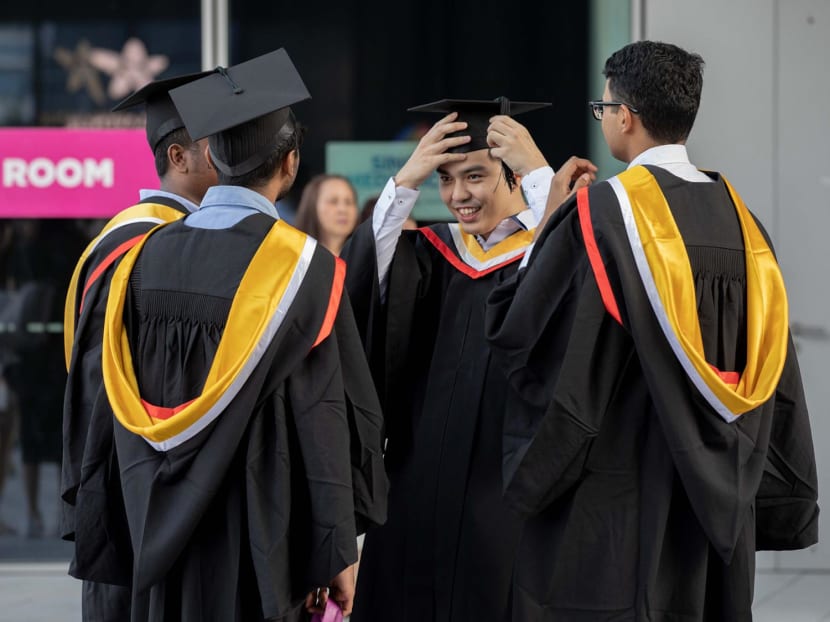
Spectacular Fewer Fresh Graduates Found Work Within 6 Months In 2025; Median Salary Held Steady At S$4,500: Survey Artwork Digital Art
Immerse yourself in the stunning details of this beautiful fewer fresh graduates found work within 6 months in 2025; median salary held steady at s$4,500: survey wallpaper, designed for a captivating visual experience.

Mesmerizing Fewer Fresh Graduates Found Work Within 6 Months In 2025; Median Salary Held Steady At S$4,500: Survey Background for Your Screen
Explore this high-quality fewer fresh graduates found work within 6 months in 2025; median salary held steady at s$4,500: survey image, perfect for enhancing your desktop or mobile wallpaper.

Beautiful Fewer Fresh Graduates Found Work Within 6 Months In 2025; Median Salary Held Steady At S$4,500: Survey Picture in 4K
Experience the crisp clarity of this stunning fewer fresh graduates found work within 6 months in 2025; median salary held steady at s$4,500: survey image, available in high resolution for all your screens.

Artistic Fewer Fresh Graduates Found Work Within 6 Months In 2025; Median Salary Held Steady At S$4,500: Survey Design for Mobile
Find inspiration with this unique fewer fresh graduates found work within 6 months in 2025; median salary held steady at s$4,500: survey illustration, crafted to provide a fresh look for your background.

Gorgeous Fewer Fresh Graduates Found Work Within 6 Months In 2025; Median Salary Held Steady At S$4,500: Survey Artwork for Desktop
Immerse yourself in the stunning details of this beautiful fewer fresh graduates found work within 6 months in 2025; median salary held steady at s$4,500: survey wallpaper, designed for a captivating visual experience.

Artistic Fewer Fresh Graduates Found Work Within 6 Months In 2025; Median Salary Held Steady At S$4,500: Survey Moment in 4K
Immerse yourself in the stunning details of this beautiful fewer fresh graduates found work within 6 months in 2025; median salary held steady at s$4,500: survey wallpaper, designed for a captivating visual experience.
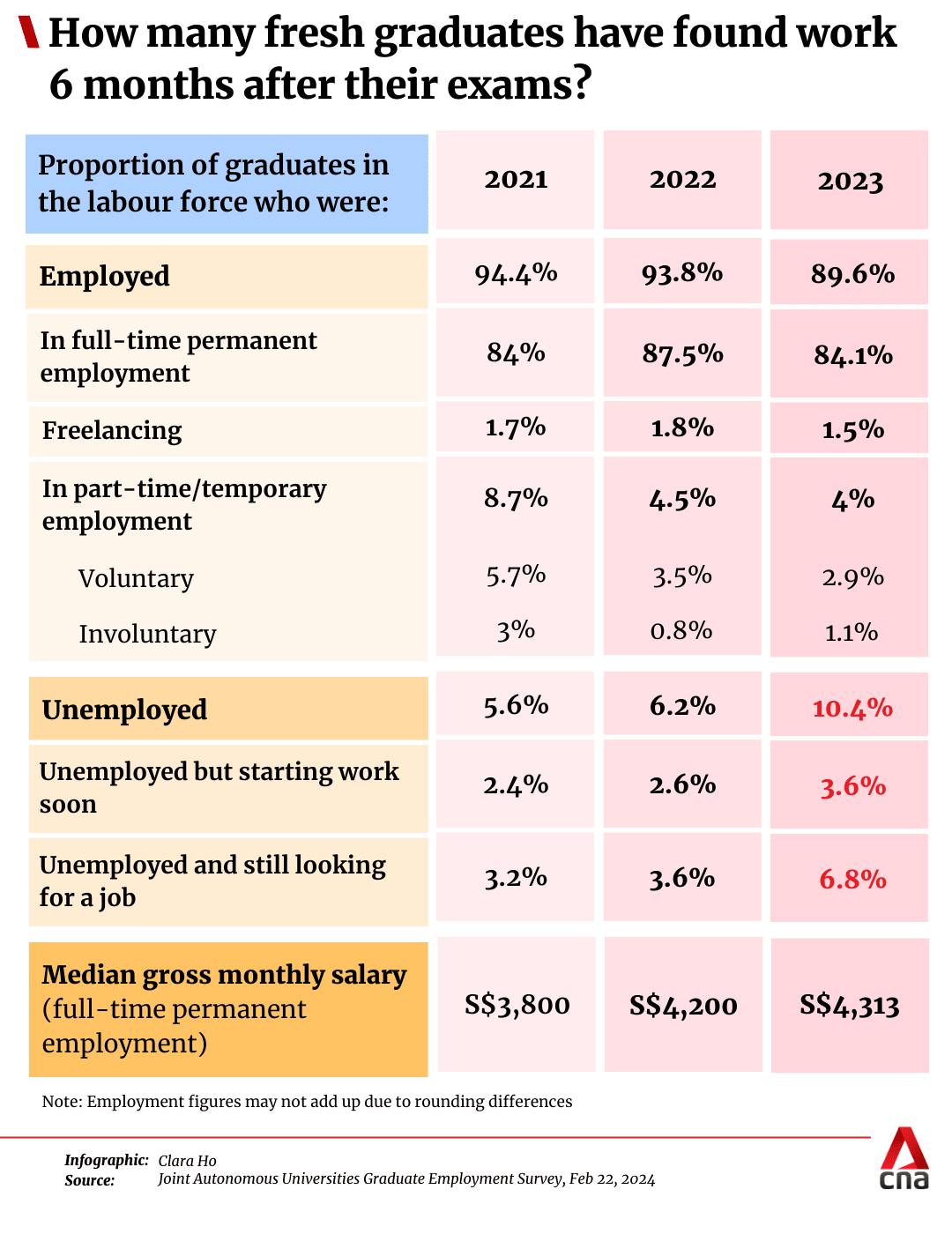
Breathtaking Fewer Fresh Graduates Found Work Within 6 Months In 2025; Median Salary Held Steady At S$4,500: Survey Landscape Nature
Discover an amazing fewer fresh graduates found work within 6 months in 2025; median salary held steady at s$4,500: survey background image, ideal for personalizing your devices with vibrant colors and intricate designs.

Vivid Fewer Fresh Graduates Found Work Within 6 Months In 2025; Median Salary Held Steady At S$4,500: Survey Moment Collection
Transform your screen with this vivid fewer fresh graduates found work within 6 months in 2025; median salary held steady at s$4,500: survey artwork, a true masterpiece of digital design.
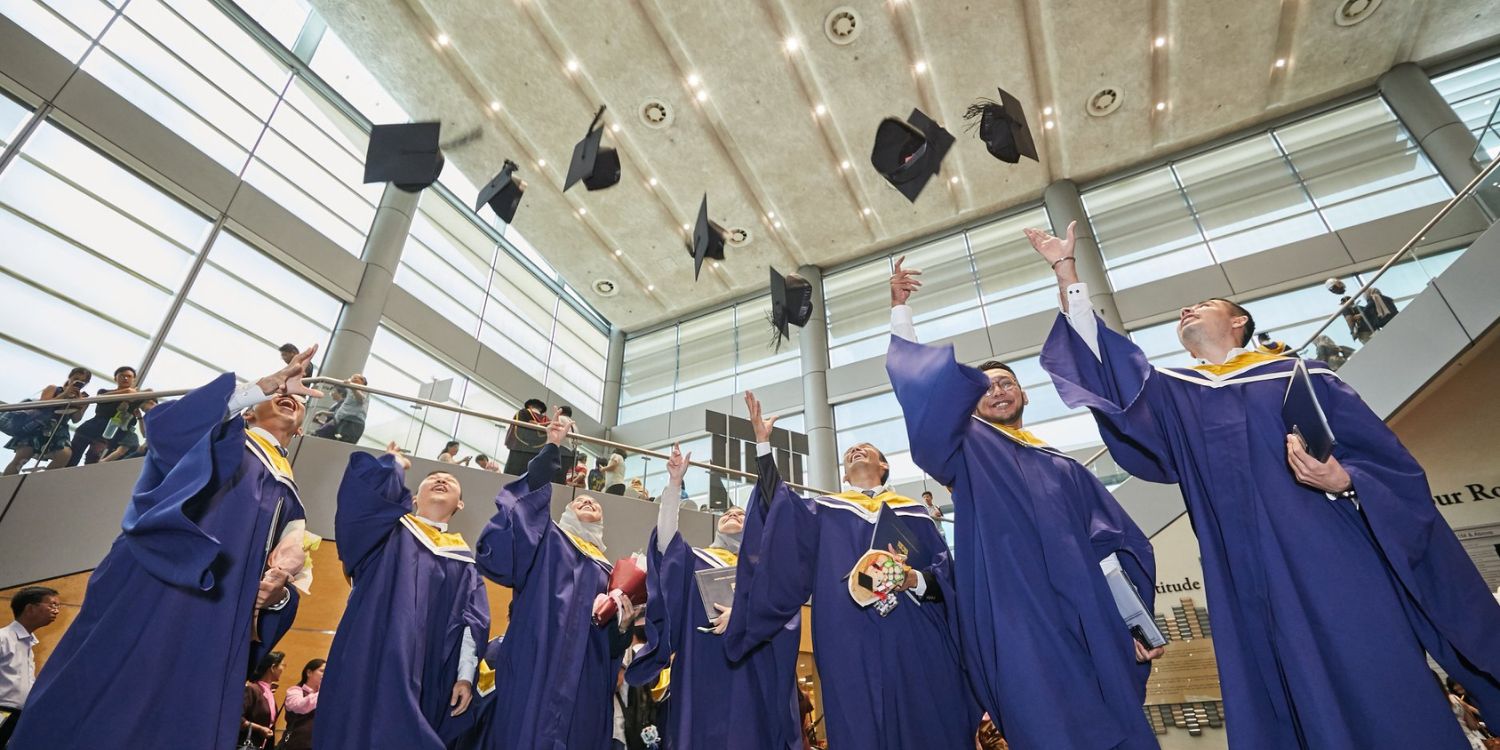
Mesmerizing Fewer Fresh Graduates Found Work Within 6 Months In 2025; Median Salary Held Steady At S$4,500: Survey View Collection
Transform your screen with this vivid fewer fresh graduates found work within 6 months in 2025; median salary held steady at s$4,500: survey artwork, a true masterpiece of digital design.
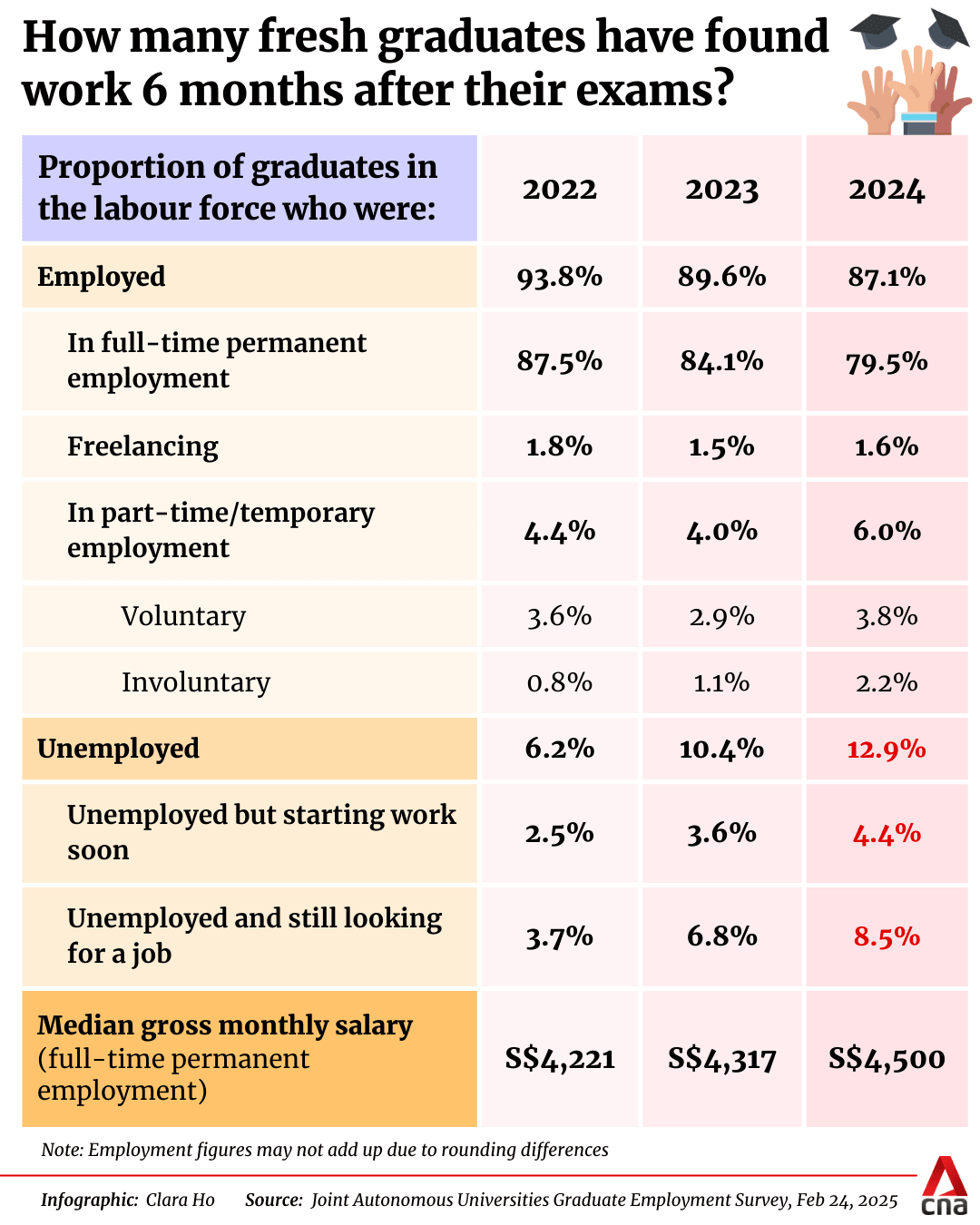
Crisp Fewer Fresh Graduates Found Work Within 6 Months In 2025; Median Salary Held Steady At S$4,500: Survey Photo Concept
Find inspiration with this unique fewer fresh graduates found work within 6 months in 2025; median salary held steady at s$4,500: survey illustration, crafted to provide a fresh look for your background.
Amazing Fewer Fresh Graduates Found Work Within 6 Months In 2025; Median Salary Held Steady At S$4,500: Survey Artwork Photography
Discover an amazing fewer fresh graduates found work within 6 months in 2025; median salary held steady at s$4,500: survey background image, ideal for personalizing your devices with vibrant colors and intricate designs.

Amazing Fewer Fresh Graduates Found Work Within 6 Months In 2025; Median Salary Held Steady At S$4,500: Survey Scene in HD
Discover an amazing fewer fresh graduates found work within 6 months in 2025; median salary held steady at s$4,500: survey background image, ideal for personalizing your devices with vibrant colors and intricate designs.
.jpg?itok=mRYEE8NF "Vivid Fewer Fresh Graduates Found Work Within 6 Months In 2025; Median Salary Held Steady At S$4,500: Survey Abstract Digital Art")
Vivid Fewer Fresh Graduates Found Work Within 6 Months In 2025; Median Salary Held Steady At S$4,500: Survey Abstract Digital Art
Transform your screen with this vivid fewer fresh graduates found work within 6 months in 2025; median salary held steady at s$4,500: survey artwork, a true masterpiece of digital design.

Spectacular Fewer Fresh Graduates Found Work Within 6 Months In 2025; Median Salary Held Steady At S$4,500: Survey Abstract for Mobile
Find inspiration with this unique fewer fresh graduates found work within 6 months in 2025; median salary held steady at s$4,500: survey illustration, crafted to provide a fresh look for your background.
Breathtaking Fewer Fresh Graduates Found Work Within 6 Months In 2025; Median Salary Held Steady At S$4,500: Survey Capture Nature
Explore this high-quality fewer fresh graduates found work within 6 months in 2025; median salary held steady at s$4,500: survey image, perfect for enhancing your desktop or mobile wallpaper.

Exquisite Fewer Fresh Graduates Found Work Within 6 Months In 2025; Median Salary Held Steady At S$4,500: Survey Landscape Illustration
Immerse yourself in the stunning details of this beautiful fewer fresh graduates found work within 6 months in 2025; median salary held steady at s$4,500: survey wallpaper, designed for a captivating visual experience.
Vibrant Fewer Fresh Graduates Found Work Within 6 Months In 2025; Median Salary Held Steady At S$4,500: Survey Scene Illustration
Explore this high-quality fewer fresh graduates found work within 6 months in 2025; median salary held steady at s$4,500: survey image, perfect for enhancing your desktop or mobile wallpaper.
Dynamic Fewer Fresh Graduates Found Work Within 6 Months In 2025; Median Salary Held Steady At S$4,500: Survey Design Art
Find inspiration with this unique fewer fresh graduates found work within 6 months in 2025; median salary held steady at s$4,500: survey illustration, crafted to provide a fresh look for your background.
Exquisite Fewer Fresh Graduates Found Work Within 6 Months In 2025; Median Salary Held Steady At S$4,500: Survey Scene for Your Screen
A captivating fewer fresh graduates found work within 6 months in 2025; median salary held steady at s$4,500: survey scene that brings tranquility and beauty to any device.

Beautiful Fewer Fresh Graduates Found Work Within 6 Months In 2025; Median Salary Held Steady At S$4,500: Survey Abstract for Desktop
Experience the crisp clarity of this stunning fewer fresh graduates found work within 6 months in 2025; median salary held steady at s$4,500: survey image, available in high resolution for all your screens.
Download these fewer fresh graduates found work within 6 months in 2025; median salary held steady at s$4,500: survey wallpapers for free and use them on your desktop or mobile devices.
0 Response to "Fewer fresh graduates found work within 6 months in 2025; median salary held steady at S$4,500: Survey"
Post a Comment